


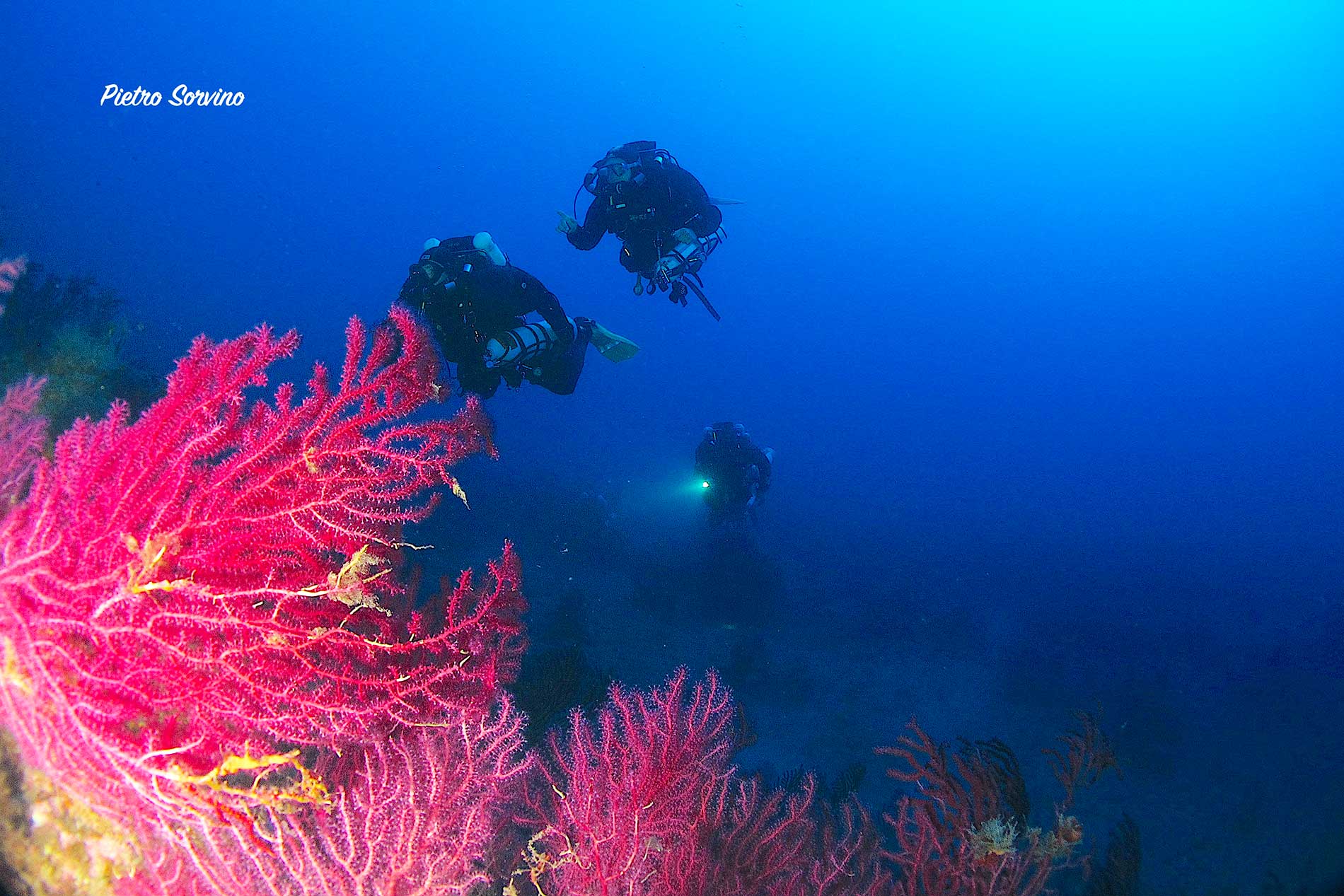
There are plants, such as red algae. And there are animals, such as bryozoans, annelids and anthozoans. Many different species, all benthic and with another common characteristic: the ability to build calcium carbonate structures on the seabed. Mostly hard, made of rock. But also mobile, made of sand and debris. At variable depths, between 25 and 150 meters and even more. With a progressive prevalence of animals, in relation to the reduction in brightness that gradually excludes plants due to their need for light, essential for chlorophyll photosynthesis.
And the affirmation, even among animals, of shade-loving species, which can live with very little light, if not in the dark. All together they are bioconstructor organisms and contribute to the creation of the coralligenous, in fact the equivalent in the Mediterranean and in temperate seas of the coral reefs characteristic of tropical seas. A habitat that, although not recognized as a priority at European level, has an extraordinary value for the very high biodiversity that accompanies it and for its essential contribution to the life of the numerous marine ecosystems that are connected to it and, in general, to the health of the sea. Reason why the coralligenous is considered worthy of special protection, as occurs in the Marine Protected Areas.
The main action in the construction of the coralligenous is carried out by calcareous algae, which produce encrustations on the substrate on which they live. When they die, the thalli (i.e. the “bodies” of the algae) consolidate and overlap in layers, forming over time the calcareous structures to whose growth the skeletons of the animal bioconstructors also contribute. These calcareous buildings, which are in slow and constant growth, create favorable conditions for the settlement of other species, both plant and animal. Among these, also some biodestructors, such as sponges and perforating bivalves or some molluscs, which make space by dissolving parts of the structure and modeling it to form the cavities they need to live.
The various layers of coralligenous correspond to conditions that are useful for the life of the different species that populate it. In the upper layers we can distinguish living algae, but above all erect organisms such as gorgonians (which are anthozoans) with their spectacular shapes and magnificent colors, corals, especially red coral, and madrepores. The cavities dug by biodestructors also serve as a refuge for cephalopods and fish. Among the functions of the coralligenous, in fact, there is also that of a nursery for the young of many marine creatures, which have the possibility of becoming adults and even reproducing there.
The coralligenous plays a valuable and important role in the carbon cycle, therefore from an ecological point of view. And its health is indicative of the overall health of the sea, because its delicate balances are affected and can be put at risk by various forms of environmental degradation: eutrophication which reduces the transparency of the water, affecting the photosynthesis of algae; anchoring which mechanically destroys parts of the structures, killing their inhabitants; the increase in sea temperature, which upsets the living conditions of animals and plants. The phenomenon of sea acidification, then, has a heavy effect both on the calcareous organisms that form the coralligenous and on the already existing and consolidated structures. All themes and problems at the center of attention of the research world, which is investigating the impact of climate change and the increase in CO2 in the atmosphere on marine habitats and species.
Prevalentemente duri, di roccia. Ma anche mobili, di sabbia e detriti. A profondità variabili, tra i 25 e i 150 metri e anche più. Con una progressiva prevalenza degli animali, in rapporto alla riduzione di luminosità che esclude via via i vegetali per il loro bisogno di luce, indispensabile per la fotosintesi clorofilliana. E l’affermarsi, anche tra gli animali, delle specie sciafile, che possono vivere con pochissima luce, se non al buio. Tutti insieme sono organismi biocostruttori e contribuiscono alla creazione del coralligeno, di fatto l’equivalente nel Mediterraneo e nei mari temperati delle barriere coralline caratteristiche dei mari tropicali. Un habitat che, sebbene non sia riconosciuto come prioritario a livello europeo, ha un valore straordinario per l’altissima biodiversità che gli si accompagna e per il suo contributo imprescindibile alla vita dei numerosi ecosistemi marini che vi sono collegati e, in generale, alla salute del mare. Motivo per il quale il coralligeno è ritenuto meritevole di particolari tutele, come avviene nelle Aree Marine Protette.
L’azione principale nella costruzione del coralligeno la svolgono le alghe calcaree, che producono incrostazioni sul sostrato su cui vivono. Quando muoiono, i talli (ovvero i “corpi” delle alghe) si consolidano e si sovrappongono a strati, formando nel tempo le strutture calcaree al cui accrescimento contribuiscono poi anche gli scheletri dei biocostruttori animali. Questi edifici calcarei, che sono in lenta e costante crescita, creano le condizioni favorevoli all’insediamento di altre specie, vegetali e animali. Tra queste, anche alcune di biodistruttori, come spugne e bivalvi perforanti o alcuni molluschi, che si fanno spazio dissolvendo parti della struttura e modellandola per formarvi le cavità di cui hanno bisogno per vivere.
Ai vari strati di coralligeno corrispondono condizioni utili alla vita delle diverse specie che lo popolano. Negli strati superiori si distinguono le alghe vive, ma soprattutto gli organismi a portamento eretto come le gorgonie (che sono antozoi) con le loro spettacolari forme e i loro magnifici colori, i coralli, in particolare il corallo rosso, e le madrepore. Le cavità scavate dai biodistruttori, inoltre, servono come rifugio a cefalopodi e pesci. Tra le funzioni del coralligeno, infatti, vi è anche quella di nursery per i giovanili di tante creature marine, che hanno la possibilità di diventarvi adulte e anche di riprodurvisi.
Il coralligeno svolge un ruolo prezioso e importante nel ciclo del carbonio, dunque dal punto di vista ecologico. E la sua salute è indicativa della salute complessiva del mare, perché i suoi delicati equilibri risentono e possono essere messi a rischio dalle varie forme di degrado ambientale: l’eutrofizzazione che riduce la trasparenza dell’acqua, incidendo sulla fotosintesi delle alghe; gli ancoraggi che distruggono meccanicamente parti delle strutture uccidendone gli abitanti; l’aumento della temperatura del mare, che sconvolge le condizioni di vita di animali e vegetali. Il fenomeno dell’acidificazione dei mari, poi, ha un effetto pesante sia sugli organismi calcarei che formano il coralligeno sia sulle strutture già esistenti e già consolidate. Tutti temi e problemi al centro dell’attenzione del mondo della ricerca, che sta approfondendo l’impatto del cambiamento climatico e dell’incremento di CO2 nell’atmosfera sugli habitat e sulle specie marine.